Complete Active Recall Study Strategies Guide for Grades 3-8
Complete Active Recall Study Strategies Guide for Grades 3-8
TL;DR: To stop your child from failing tests after acing homework, you must remove the "training wheels" during study sessions using active recall study strategies. The "illusion of competence" occurs when students rely on hints, open books, or parental help during practice, mistaking familiarity for mastery (Sinha, 2025). Active recall requires retrieving information from memory without assistance, which creates "desirable difficulty" and hardens neural pathways. For grades 3-8, the most effective method is switching from passive review to simulated testing conditions. Start by using PrepCraft’s "Test Mode" to strip away hints and validate true understanding before exam day.
Introduction
Does your child consistently bring home perfect homework scores only to bomb the actual exam? You are not alone. This frustrating phenomenon often boils down to a lack of active recall study strategies in their daily routine. It is what experts call the "training wheels trap."
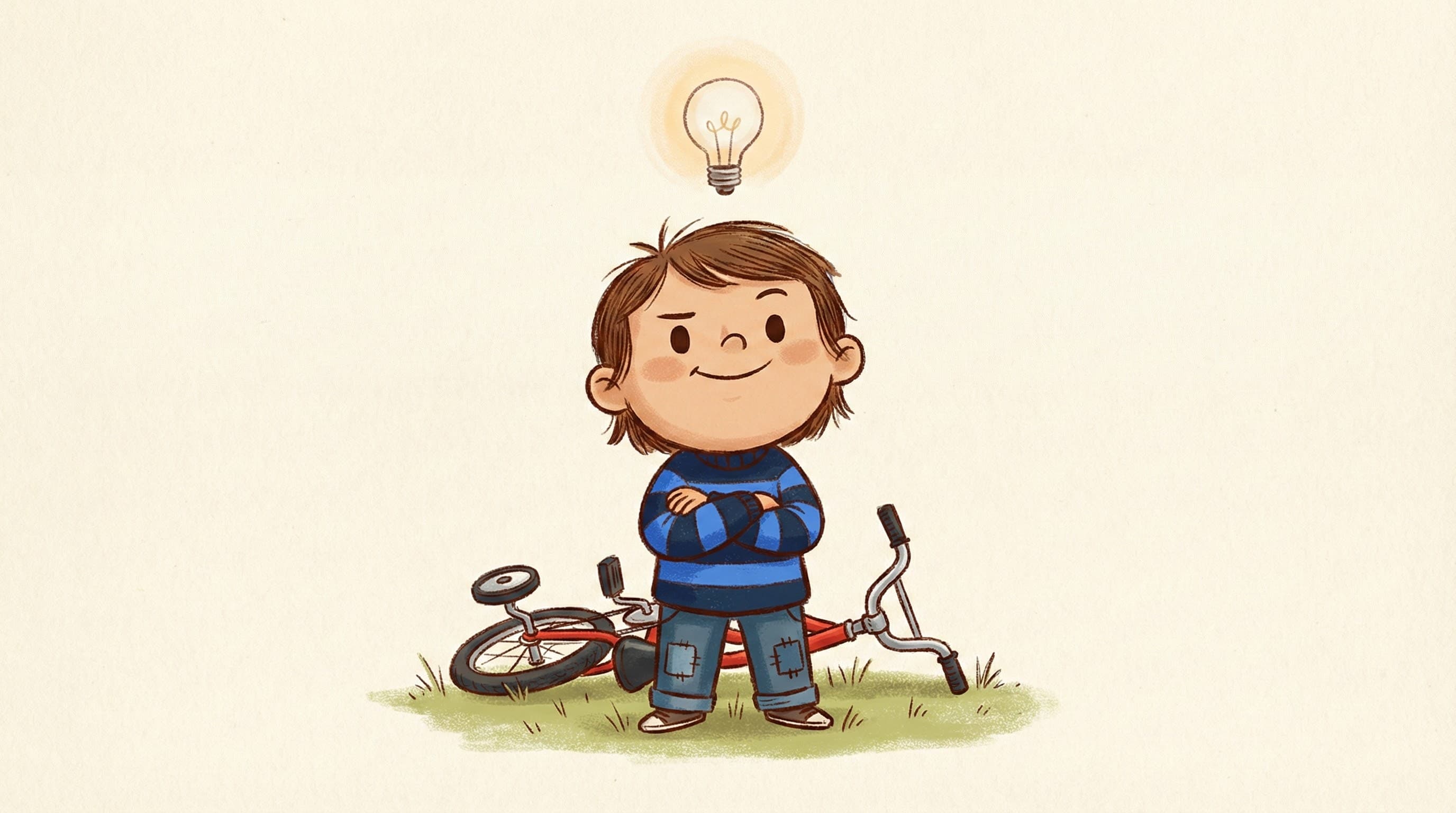
Think about teaching a child to ride a bike. You put on training wheels. The child pedals from the driveway to the sidewalk and thinks, "I can ride a bike!" But they haven't learned to balance. They have only learned to pedal. The training wheels did the balancing for them. When you take the wheels off for the first time, they crash.
Standard homework help acts exactly like those training wheels. When you offer hints, when they look up answers in a textbook, or when they have unlimited time, they are only pedaling. They are not balancing. In simple terms, active recall study strategies are the process of taking the training wheels off before the test, forcing the brain to retrieve information without support.
Try PrepCraft's grades 3-8 practice test free for 7 days → PrepCraft
The Training Wheels Paradox
We naturally want to help our children. When they get stuck on a math problem at the kitchen table, we step in. We give a hint. We point to the paragraph in the book where the answer hides. This feels like learning, but it is often just performance.
Shantanu Sinha, VP of Google for Education, explains this perfectly using the bicycle analogy. He notes that if you keep the training wheels on, the child focuses on the wrong skill. "The skill of riding a bicycle is learning how to balance," Sinha explains. "By putting the training wheels on, you're taking away your ability to actually focus on the skill that matters" (Sinha, 2025).
In academic terms, "balancing" is the ability to summon an answer from a blank brain under pressure. "Pedaling" is just writing the answer down once someone else has found it for you. If your child only practices with the training wheels on, the test will be the first time they are forced to balance. That is why they crash.
What Is the Illusion of Competence?
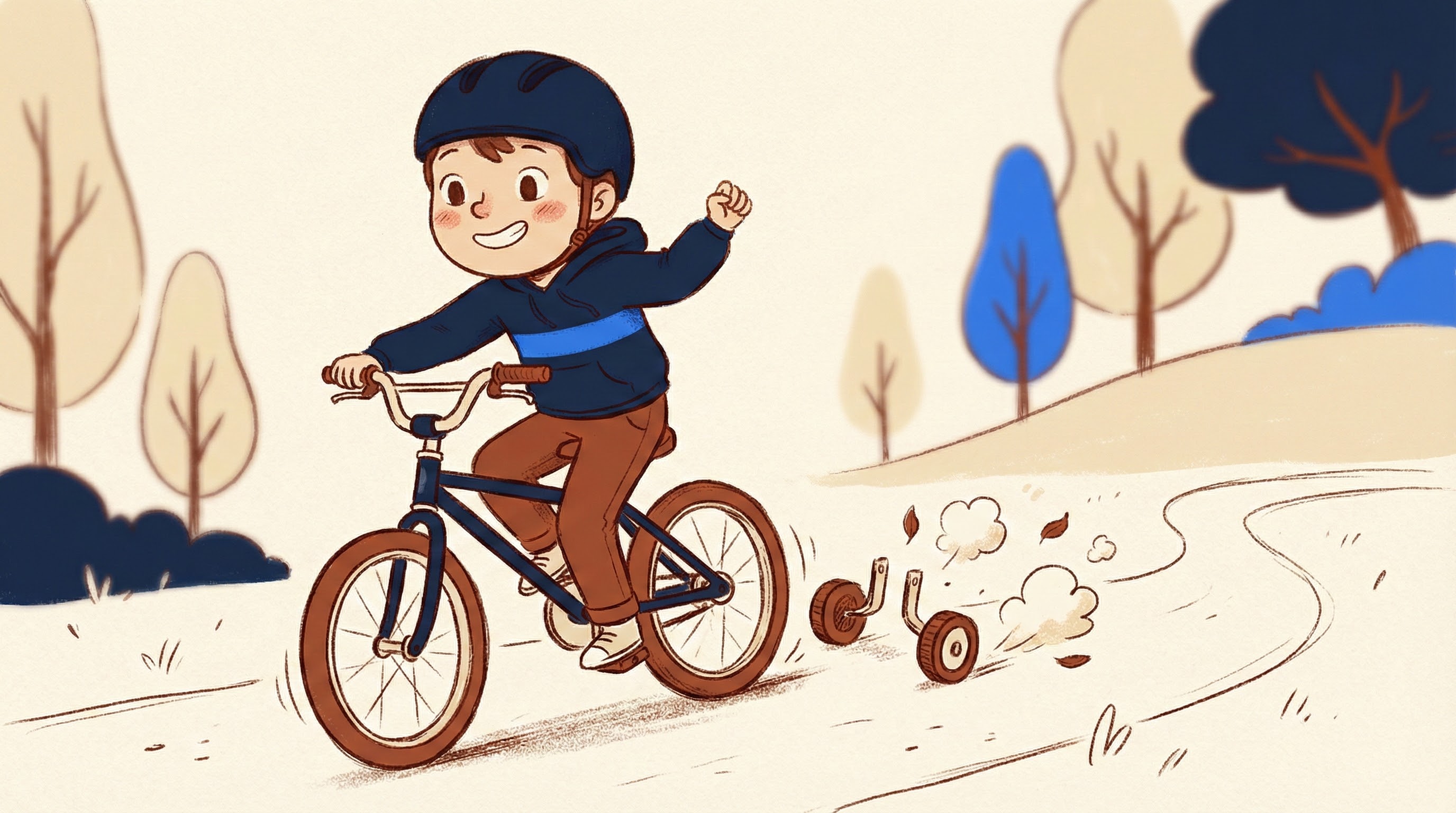
The illusion of competence is a psychological state where a student believes they have mastered material because they recognize it, even though they cannot reproduce it on their own. This is the primary reason for the homework-test gap.
When a student reads a textbook chapter three times, they become familiar with the text. They look at a page and think, "I know this." However, recognizing information is a passive skill. Retrieving information is an active skill. Tests require retrieval, not just recognition.
Key takeaway: Familiarity is not mastery. Just because your child understands the answer when you say it, does not mean they can find that answer alone.
Research discussed at the 2025 AI+Education Summit highlights that students are notoriously poor judges of their own knowledge (Google/Khan Academy/Stanford, 2025). They mistake the ease of "practice mode" (where hints are available) for actual ability. To break this illusion, we must introduce what psychologists call "desirable difficulty." The struggle to remember is actually what encodes the memory.
How Can I Implement Active Recall Study Strategies?
You can implement active recall study strategies by changing your child's study routine from passive review to active retrieval. This means closing the book, hiding the notes, and forcing the brain to work.
The most effective preparation includes:
Step 1: The "Blurt" Method. Have your child read a section of their textbook. Then, close the book. Ask them to write down or say out loud everything they remember without looking.
Step 2: The Flashcard Pivot. Most kids flip a flashcard, look at the answer, and say, "Oh yeah, I knew that." That is passive. They must say the answer out loud before flipping the card. If they hesitate, they do not know it.
Step 3: The Teacher Technique. Ask your child to teach the concept to you. If they stumble or use filler words like "you know," it indicates a gap in understanding.
Get instant AI explanations for every active recall study strategies question. Start free trial →PrepCraft
Why Is PrepCraft’s Test Mode Essential for Grades 3-8?
PrepCraft’s Test Mode is essential because it systematically removes the "training wheels" in a safe environment before the actual exam. While our Practice Mode offers hints and AI guidance (the pedaling), Test Mode strips these supports away (the balancing).
To compare these two options:
Feature
Practice Mode (Training Wheels ON)
Training Wheels OFF
Hints
Available on demand
Disabled completely
Timing
Untimed/Relaxed
Realistic countdown timer
Feedback
Immediate after every question
Only at the end of the section
Goal
Learning the mechanics
Verifying true mastery
In simple terms, utilizing Test Mode exposes the illusion of competence. It shows you exactly what your child knows versus what they think they know. This prevents the shock of test day failure.
Stanford Professor Chris Piche notes that while AI and tools can help explain concepts, we must ensure students don't use them to bypass the struggle of learning. "The skill of riding a bicycle is learning how to balance," and technology should support that balance, not replace it (Piche, 2025). PrepCraft uses AI to explain why an answer is wrong after the test, acting as a coach rather than a crutch.
What Are Common Study Mistakes Parents Make?
A common mistake to avoid is confusing "helping" with "doing." When you sit next to your child and guide their pencil, you are creating a dependency.
Don't make the error of:
-
Rereading notes repeatedly: This is the least effective study method. It creates the illusion of competence without building neural pathways.
-
Highlighting everything: This is busy work. It feels productive but requires zero brain power.
-
Immediate rescue: When your child sighs or looks frustrated, do not jump in immediately. Wait. Let them struggle for 30 seconds. That struggle is where the learning happens.
The most important shift you can make is to become a "guide on the side" rather than a "sage on the stage." Ask questions like, "What do you think the first step is?" rather than saying, "First, you need to divide."
When Should My Child Start Using Active Recall?
Your child should start using active recall study strategies immediately, regardless of their current grade level (3-8). The sooner they learn to test themselves, the easier school becomes.
Research indicates that students who practice retrieval (active recall) retain 50% more information after a week compared to those who just restudied the material (Roediger & Karpicke, 2006). For a third grader preparing for the CogAT or an eighth grader prepping for the Iowa Assessments, this retention is critical.
Start small. Dedicate the last 10 minutes of homework time to "Test Mode." Put away the books and have them solve one problem from start to finish with zero help. If they can't do it, they haven't mastered it yet.
Access 500+ practice questions with step-by-step solutions →PrepCraft
FAQ: Frequently Asked Questions
1. What if my child gets frustrated when I remove the help?
Frustration is normal. It is the feeling of the training wheels coming off. Validate their feelings ("I know this is hard") but do not solve the problem for them. Encourage them to use their resources to find the answer themselves, then try again without looking.
2. How long should active recall sessions last?
For grades 3-8, keep sessions short. 15-20 minutes of intense, focused active recall is more valuable than two hours of passive reading.
3. Can active recall help with test anxiety?
Absolutely. Test anxiety often comes from the fear of the unknown. By simulating test conditions at home (Test Mode), the actual exam feels familiar and less scary.
4. Is this method only for math and science?
No. You can use active recall for reading comprehension and vocabulary too. Have your child read a passage and then summarize the main idea without looking back at the text.
5. How does PrepCraft support active recall?
PrepCraft is built on this principle. Our adaptive platform forces students to recall information to solve problems, and our Test Mode simulates the pressure of the real exam, ensuring they are truly ready.
Conclusion
The gap between homework success and test failure is not a mystery. It is a result of the "training wheels trap." By relying on hints and help, students build an illusion of competence that crumbles under pressure.
Bottom line: You must prioritize active recall study strategies. Stop asking "Did you finish your homework?" and start asking "Can you teach me what you learned without looking at your notes?"
Take the training wheels off in a safe environment. Use PrepCraft to simulate the real test experience, identify the gaps, and build the kind of genuine confidence that leads to success on test day.
Start your free PrepCraft trial today and help your child master grades 3-8 test prep → PrepCraft